Knee Pain How to Relieve: Causes, Treatment & Exercises
Approved By Dr Sohail Magoon
If you are looking for knee pain how to relieve, the best approach depends on why the knee hurts. Mild pain after exercise may improve with activity modification, ice, gentle movement, and strengthening, while persistent or severe pain can require a proper examination to identify arthritis, ligament problems, meniscus damage, tendon irritation, gout, or another condition.
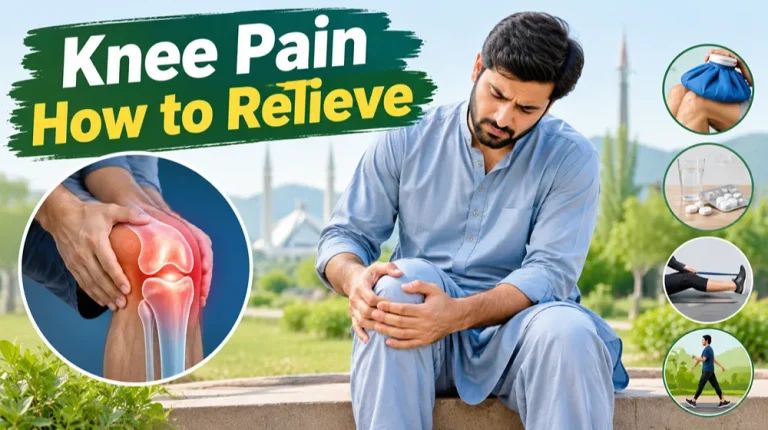
Knee pain is not always caused by the knee joint itself. Pain can occur around, behind, above or below the kneecap and may sometimes extend toward the thigh, calf or hip. The location, timing and type of pain can provide useful clues, but they cannot replace a professional diagnosis.
What Causes Knee Pain?
Common causes include injury, overuse, muscle weakness, arthritis and inflammation. Running, jumping, squats, prolonged sitting, climbing stairs and repetitive exercise can aggravate certain knee conditions.
Some common patterns include:
- Pain under or around the kneecap: often associated with patellofemoral problems or irritation around the kneecap.
- Pain below the kneecap: may occur with patellar tendon irritation.
- Pain on the inner knee: can involve the medial structures, meniscus or surrounding tendons.
- Pain behind the knee: may come from muscles, tendons, the joint or other structures and deserves assessment if persistent.
- Pain with swelling and stiffness: can occur with osteoarthritis, inflammatory conditions or injury.
- Sudden severe pain: may occur with gout, significant injury or, less commonly, infection.
Osteoarthritis commonly causes knee pain, stiffness, tenderness, swelling, and difficulty moving the joint. Symptoms can vary considerably and may come and go.
Knee Pain in Women
People often look for what causes knee pain in females or knee pain causes in women. Several factors can contribute, including previous injuries, activity level, muscle strength, body weight, pregnancy-related changes, and hormonal changes around perimenopause or menopause.
However, female knee pain should not automatically be attributed to hormones. Persistent symptoms should be assessed according to the individual’s age, activity, medical history, and examination findings.
Knee Pain How to Relieve It at Home
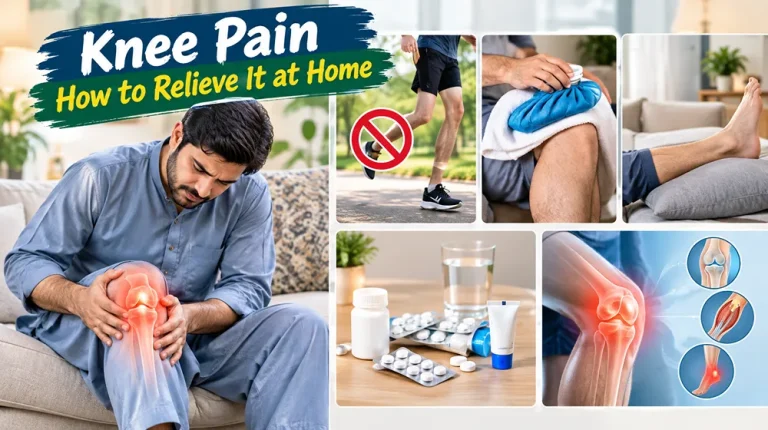
For mild knee pain without serious injury, initial self-care can often reduce symptoms.
Reduce the Activity That Triggers Pain
If running, jumping, squats, leg extensions, or another workout causes pain, temporarily reduce or stop that activity rather than repeatedly pushing through it. This does not mean keeping the knee completely still. Prolonged inactivity can increase stiffness and weakness. Gentle, comfortable movement is generally preferable when appropriate.
Use Ice for a Painful or Swollen Knee
An ice pack wrapped in a towel can be applied for up to about 20 minutes at a time. Never place ice directly on the skin. NHS guidance recommends using cold packs for short periods when managing knee pain and swelling. Heat may feel more comfortable when stiffness is the main problem, but a newly swollen knee should be evaluated rather than repeatedly treated at home.
Elevate the Leg
If your knee is swollen, elevating the leg while resting may make it more comfortable. Elevation is supportive care rather than a treatment for the underlying cause.
Consider Appropriate Pain Relief
People commonly search for a knee pain tablet name in Pakistan, the best painkiller for knee pain, or which medicine can be used for joint pain. The right medication depends on your age, medical conditions, other medicines, and the cause of the pain.
Paracetamol and anti-inflammatory medicines such as NSAIDs are among the medicines sometimes used for musculoskeletal pain, but NSAIDs are not appropriate for everyone. They can carry risks involving the stomach, kidneys, heart, and other conditions. Topical anti-inflammatory gels may be an option for some people with knee osteoarthritis.
Do not choose prescription-strength medication simply because it worked for someone else.
Knee Pain How to Relieve With Exercise
Exercise is one of the most important long-term strategies for many people with knee osteoarthritis. Strengthening the muscles around the knee can improve function and support everyday movement. The key is choosing exercises appropriate for the underlying problem.
Consider Appropriate Pain Relief
Depending on your condition, a physiotherapist may recommend exercises such as:
For example, a basic quadriceps exercise involves straightening the leg and gently tightening the thigh muscle while keeping the knee supported. NHS physiotherapy resources also commonly use quadriceps contractions, straight-leg raises, sit-to-stand movements and calf raises for knee osteoarthritis rehabilitation.
How to Reduce Knee Pain During Squats
If squats hurt, do not simply force yourself through deeper repetitions. Reduce the range of motion, control the movement, and check whether your technique, load, or exercise selection is contributing to the problem. A chair-assisted squat or sit-to-stand exercise may be easier to tolerate initially.
Knee Pain From Running
Running-related knee pain can result from overuse, training errors, tendon problems or other musculoskeletal issues. If running causes pain, temporarily stop running rather than trying to run through it. NHS guidance recommends assessment if pain persists after a period of rest or if the pain is severe or associated with swelling. Return to running should be gradual and based on recovery rather than a fixed number of days.
Can Massage, Yoga or Home Remedies Help?
Massage may temporarily make some people feel more comfortable by relaxing surrounding soft tissues, but it should not be used to diagnose or cure the cause of knee pain. Similarly, gentle knee pain yoga poses can be useful when they improve flexibility and movement without increasing symptoms. Avoid positions that place excessive pressure on a painful or swollen knee.
If you use a topical substance, avoid applying it to broken or irritated skin.
When Is Knee Pain a Sign of a More Serious Problem?
Not every painful knee requires imaging or advanced treatment, but certain symptoms should not be ignored. Seek prompt medical attention if:
A hot, red, swollen knee accompanied by fever can indicate infection and requires urgent medical assessment. Severe pain after an injury, inability to bear weight, deformity or loss of movement can also require urgent evaluation.
How Is Knee Pain Diagnosed?
There is no reliable way to completely self-diagnose knee pain at home. A clinician normally considers:
An X-ray may be useful when arthritis or bone problems are suspected. Other imaging, such as MRI or ultrasound, may be considered when the clinical situation warrants it. A normal X-ray does not necessarily mean that everything inside or around the knee is normal. Some soft-tissue problems cannot be adequately evaluated on a plain X-ray.
Knee Pain Treatment When Home Care Is Not Enough
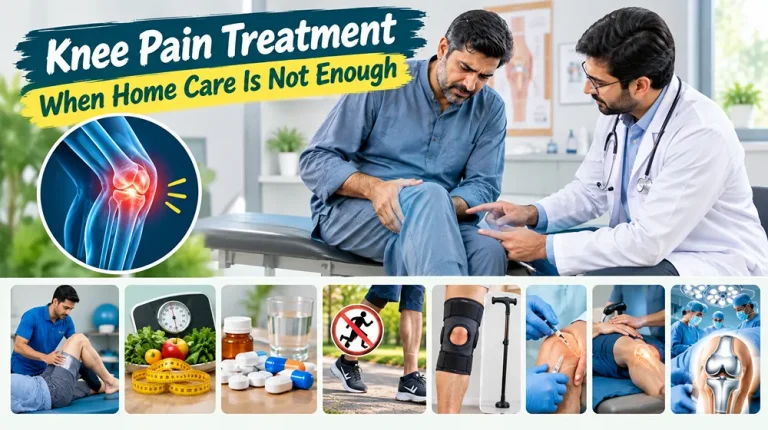
If your knee pain keeps returning, lasts for several weeks, affects sleep or prevents normal activities, professional assessment is appropriate. Treatment depends on the diagnosis and may include:
- Physiotherapy and targeted exercise
- Weight-management support when appropriate Medication
- Activity modification
- Bracing or walking aids in selected cases
- Injections for specific conditions
- Specialist pain-management procedures
- Surgery when structural damage or severe disease warrants it
For osteoarthritis, exercise, maintaining a healthy weight, and appropriate pain management are important parts of treatment. Surgery is generally reserved for selected cases when symptoms remain severe despite other measures.
Advanced Non-Surgical Options for Persistent Knee Pain
When conservative treatment has not provided sufficient relief, a specialist may discuss minimally invasive or regenerative treatment options depending on the diagnosis.
At Sohail OrthoCure, treatment options listed for musculoskeletal and joint pain include prolotherapy, platelet-rich plasma (PRP), mesenchymal stem cell therapy, ozone therapy, neural prolotherapy, nerve blocks, and other interventional approaches. The clinic states that knee conditions are assessed before selecting an appropriate treatment pathway.
Prolotherapy
Prolotherapy uses injections intended to stimulate a healing response in selected ligaments, tendons or joints. Sohail OrthoCure specifically offers prolotherapy for knee conditions including chronic knee pain, arthritis, ligament instability, ACL/PCL problems and meniscus-related conditions.
PRP therapy
PRP therapy uses a concentrated preparation derived from the patient’s own blood. It may be considered for selected knee and soft-tissue problems after clinical assessment.
Other regenerative or interventional procedures may be considered in carefully selected patients. Every treatments are not universally appropriate, and the evidence and expected benefit vary by diagnosis. A consultation should establish whether a particular procedure is suitable rather than assuming that an injection/Surgery is the best answer for every painful knee.
How to Prevent Knee Pain
Prevention is not always possible, but several habits can reduce unnecessary strain:
- Increase exercise intensity gradually.
- Strengthen the quadriceps, hamstrings, hips and calves.
- Use appropriate footwear.
- Avoid suddenly increasing running distance.
- Warm up before demanding exercise.
- Maintain a healthy body weight.
- Correct poor exercise technique.
- Take breaks from prolonged sitting.
- Do not repeatedly exercise through significant pain.
Weight management can be particularly relevant when osteoarthritis is present because excess body weight increases mechanical stress on weight-bearing joints. Clinical guidance supports weight management as part of osteoarthritis care.
Frequently Asked Questions
Conclusion
The best answer to knee pain how to relieve is not simply a tablet, massage or home remedy. Effective treatment starts by identifying why the knee hurts and then matching the treatment to the underlying problem. For mild symptoms, activity modification, appropriate ice or heat, gentle movement, strengthening and safe pain-relief measures may help. Persistent or recurrent pain may require physiotherapy, medication, imaging or specialist treatment. When conservative care is insufficient, selected patients may also discuss non-surgical interventional or regenerative options such as PRP or prolotherapy with a qualified specialist.
If your knee pain is persistent, severe, associated with swelling, locking, instability or difficulty walking, seek a proper evaluation rather than repeatedly treating the symptom at home. A personalized diagnosis is the safest starting point for deciding knee pain how to relieve and how to protect your mobility in the long term.
Book Appointment
With Dr. Sohail Magoon