
PRP Microneedling: Benefits, Cost, and What to Actually Expect
Approved By Dr Sohail Magoon
PRP microneedling combines two separate treatments — controlled micro-injuries to the skin and your own blood’s growth factors — into one session that’s become one of the most requested non-surgical options for skin and hair concerns in Pakistan. It’s sometimes marketed as the “vampire facial,” though the name describes the look of the plasma, not anything unusual about the procedure itself. You’ll see it written both ways — PRP microneedling and microneedling with PRP — but they refer to the exact same treatment.
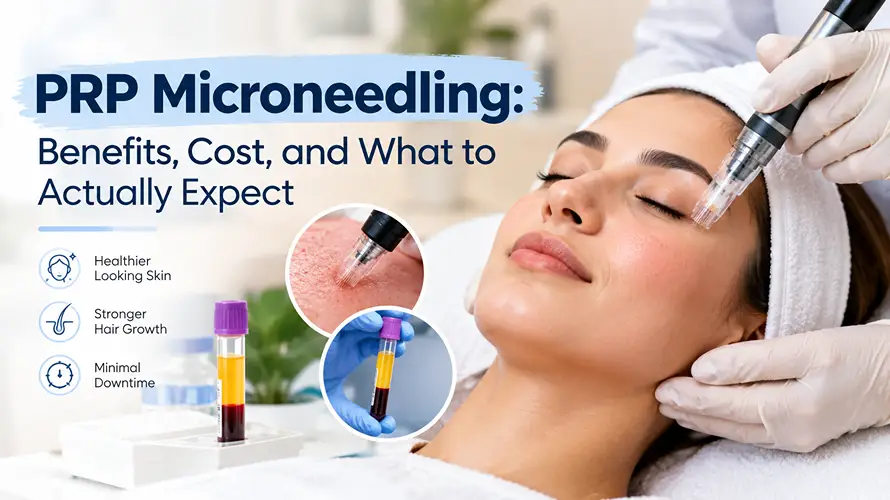
This Clinical web guide covers what the treatment actually does, who it genuinely helps, what results and downtime realistically look like, how it compares to similar options, and what it costs in Pakistan.
What Is PRP Microneedling?
PRP microneedling is a two-part treatment: first, a device with fine needles creates controlled micro-channels in the skin, and then platelet-rich plasma (PRP in Islamabad) — drawn from your own blood and concentrated to isolate the growth-factor-rich portion — is applied into those channels. The micro-injury from needling triggers the skin’s natural repair response, and the PRP amplifies that response by delivering a concentrated dose of growth factors directly where the skin is already primed to absorb them.
On its own, microneedling stimulates collagen. Adding PRP is meant to make that stimulation more effective, which is why the combination, rather than either treatment alone, is what’s usually recommended for visible scarring, hair thinning, or more stubborn skin texture concerns.
Benefits for Skin and Hair
For Acne Scars and Skin Texture
Acne scars form because the skin’s normal collagen structure is disrupted during healing. This treatment creates new, organized micro-injuries that prompt fresh collagen production, which over a series of sessions can soften the depth and visibility of acne scarring. It also tends to improve overall skin texture, pore appearance, and tone, which is why it’s commonly requested even by people without scarring, simply for general skin rejuvenation.
For Under-Eyes and Dark Circles
The under-eye area has thin, delicate skin that responds differently than the rest of the face, so treatment here is typically done with finer needle depths and more caution. Under the eyes, it’s generally aimed at improving skin thickness and texture, which can soften the look of fine lines and, for some patients, reduce the appearance of dark circles tied to thin skin rather than pigmentation.
For Hair Loss and Hair Growth
For hair, the same principle applies to the scalp: micro-channels improve how well the scalp absorbs the PRP, and the growth factors support the hair follicle environment. It’s most often used for early-stage thinning rather than areas with long-standing, complete hair loss, where the follicles may no longer be active enough to respond.
Before and After: What Results Actually Look Like
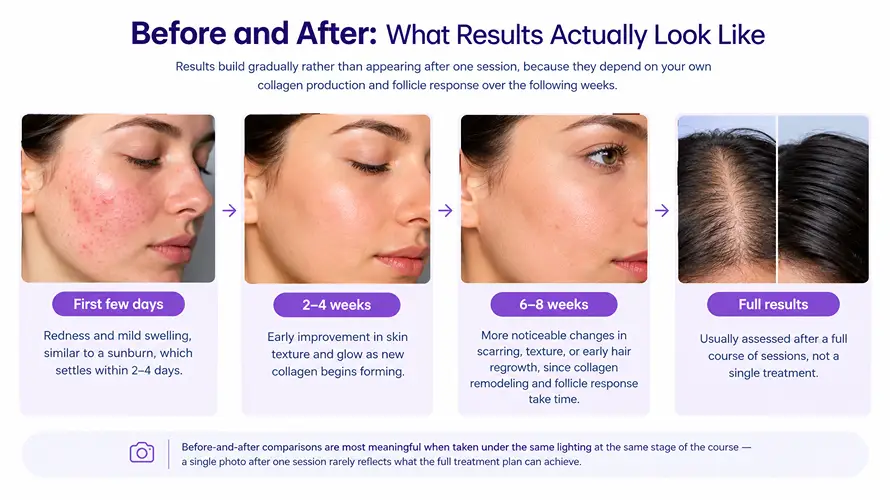
Results build gradually rather than appearing after one session, because they depend on your own collagen production and follicle response over the following weeks. A realistic timeline looks like this:
- First few days: Redness and mild swelling, similar to a sunburn, which settles within 2–4 days.
- 2–4 weeks: Early improvement in skin texture and glow as new collagen begins forming.
- 6–8 weeks: More noticeable changes in scarring, texture, or early hair regrowth, since collagen remodeling and follicle response take time.
- Full results: Usually assessed after a full course of sessions, not a single treatment.
Before-and-after comparisons are most meaningful when taken under the same lighting at the same stage of the course — a single photo after one session rarely reflects what the full treatment plan can achieve.
How the Procedure Works
- Consultation: The provider assesses your skin or scalp concern and confirms you’re a suitable candidate.
- Blood draw: A small sample is taken, similar to a routine blood test.
- PRP preparation: The sample is processed to separate and concentrate the platelet-rich plasma.
- Numbing: A topical numbing cream is applied to minimize discomfort.
- Microneedling: A device creates controlled micro-channels at a depth suited to the treatment area and concern.
- PRP application: The plasma is applied over the needled area so it can be absorbed through the micro-channels.
The full session typically takes under an hour, not counting numbing time.
How It Compares to Hyaluronic Acid and Exosomes
These three are often confused because they’re all used for skin rejuvenation, but they work differently:
Treatment | How It Works | Kis Liye Istemal Hoti Hai |
|---|---|---|
PRP Microneedling | Uses your own growth factors plus controlled micro-injury to stimulate collagen | Acne scars, overall texture, early hair thinning |
Hyaluronic Acid (fillers/skin boosters) | Adds volume and hydration directly to the skin | Volume loss, dehydration lines, not primarily for scarring |
Microneedling with Exosomes | Uses lab-processed cell-signaling particles instead of your own blood | An alternative for patients who prefer not to use their own blood product, though it’s a newer approach with less long-term data |
It’s generally the better fit when the goal is structural improvement — scarring, texture, or hair density — rather than simply adding volume or hydration.
Aftercare, Downtime, and Recovery
Downtime is minimal compared to more invasive procedures, but aftercare still matters for results:
- First 24–48 hours: Avoid makeup, sun exposure, and strenuous exercise that increases sweating on the treated area.
- Sun protection: Use sunscreen once the skin tolerates it, since new skin is more sensitive to UV damage.
- Avoid active skincare ingredients (retinol, strong acids) for about a week to let the skin recover.
- Recovery time: Most people return to normal activity within 1–3 days, though visible redness can persist slightly longer depending on skin type and needling depth.
Side Effects and Who Should Avoid It
This treatment is generally well tolerated since the PRP comes from your own blood, which minimizes the risk of allergic reaction. Common, temporary side effects include redness, mild swelling, and pinpoint bleeding immediately after the session.
It’s typically not recommended for people who are pregnant or breastfeeding, have active skin infections or acne breakouts in the treatment area, have certain blood or platelet disorders, or are on blood-thinning medication — a proper consultation before treatment is how these are screened for, rather than something to self-assess.
How Many Sessions Do You Need?
Most providers recommend a series of 3 to 6 sessions spaced about 4–6 weeks apart, depending on whether the goal is general skin rejuvenation, acne scarring, or hair restoration — scarring and hair concerns typically need more sessions than general glow-focused treatment. Results from a completed course are generally reported to last several months to around a year, after which periodic maintenance sessions are usually recommended, since the underlying aging and hair-thinning processes continue.
PRP Microneedling Price in Pakistan
The price in Pakistan varies depending on the treatment area (face, under-eyes, or scalp), the number of sessions in the plan, and the clinic’s experience and equipment. A single session is generally a different investment than a full recommended course, so most clinics quote pricing after assessing your specific concern rather than as a flat number. Sohail OrthoCure Clinic Islamabad offers this treatment, for an accurate quote based on your treatment area and goals, a direct WhatsApp consultation is the fastest way to get one.
Is It Worth It?
For acne scarring, uneven texture, or early hair thinning, it’s generally considered worth it precisely because it works with your body’s own repair mechanisms rather than introducing synthetic fillers, and because the downtime is short relative to more invasive procedures. It’s not a one-session fix, though — the value shows up over a completed course of treatments, and expectations matter: it improves texture and stimulates regrowth, but it won’t replace options like surgical hair transplants for advanced hair loss or deep volume loss that genuinely needs filler.
Frequently Asked Questions
Final Thoughts
PRP microneedling works by combining controlled micro-injury with your own blood’s growth factors to support collagen production and follicle health — a realistic, well-tolerated option for acne scarring, skin texture, and early hair thinning, provided expectations are set around a full course of sessions rather than a single visit. Sohail OrthoCure offers this treatment at its Islamabad and Multan clinics, with plans built around your specific skin or hair goals.
Book Appointment
With Dr. Sohail Magoon