Joint Pain Causes: What’s Behind Pain in Knees, Hands, and Hips
Approved By Dr Sohail Magoon
Understanding joint pain causes is the first step toward figuring out whether your discomfort is a passing strain or a sign of something that needs proper medical attention. Joint pain rarely comes from a single source — it can stem from wear and tear, inflammation, injury, or an underlying disease, and the right treatment depends entirely on which of these is driving your symptoms.
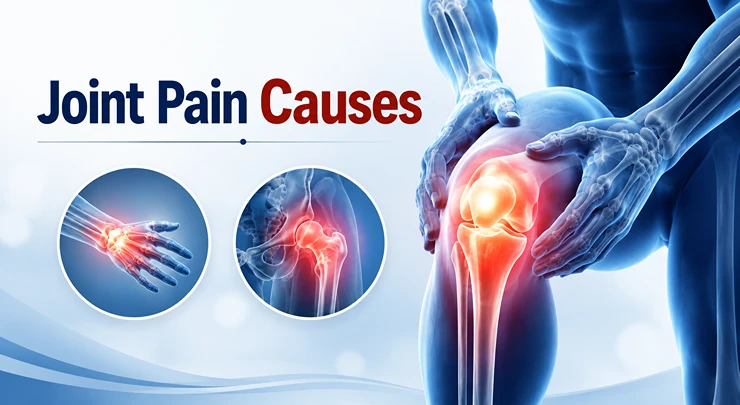
Joints are the meeting points between bones, cushioned by cartilage, lubricated by synovial fluid, and supported by ligaments and tendons. When any part of that system is damaged, irritated, or inflamed, pain follows — sometimes in one joint, sometimes throughout the body.
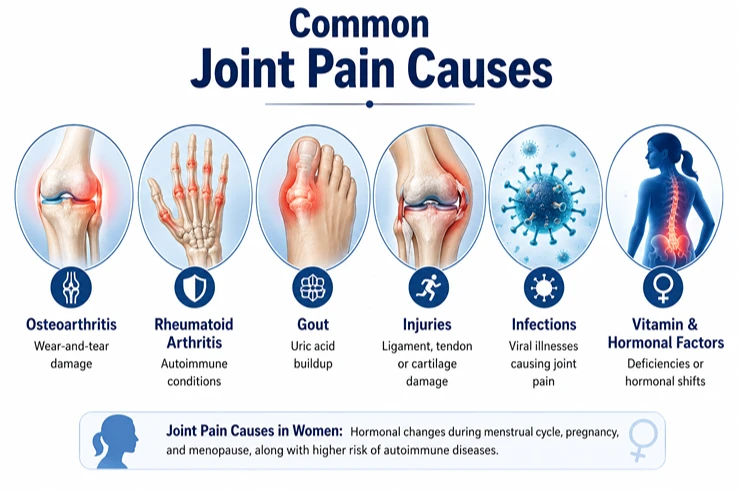
Common Joint Pain Causes You Should Know
Most cases fall into a handful of broad categories, and recognizing which one fits your situation helps narrow down next steps.
Osteoarthritis and Wear-and-Tear Damage
This is the most frequent of all joint pain causes, especially past age 40. Cartilage gradually breaks down from years of use, leaving bones to rub closer together. It typically affects weight-bearing joints — knees, hips, and the lower spine — and worsens with activity, easing somewhat with rest.
Rheumatoid Arthritis and Autoimmune Conditions
Rheumatoid arthritis is an autoimmune disease where the immune system mistakenly attacks the joint lining, causing swelling, stiffness, and warmth — usually symmetrical, affecting the same joints on both sides of the body, most often the hands, wrists, and knees. Lupus is another autoimmune condition that frequently produces joint pain, along with fatigue, skin changes, and fever.
Gout and Uric Acid Buildup
Gout occurs when excess uric acid crystallizes inside a joint, triggering sudden, intense pain, redness, and swelling. The joint gout affects most classically is the base of the big toe, though it can also strike the ankle, knee, and fingers. A gout flare tends to appear overnight and peaks within 24 hours, distinguishing it from the slower onset typical of arthritis.
Ligament, Tendon, and Cartilage Injuries
Torn ligaments, strained tendons, and worn-down cartilage are among the joint pain causes most often missed on a basic exam. These injuries can happen suddenly during sport or gradually from repetitive strain, and the pain often lingers because damaged connective tissue heals slowly on its own without targeted support.
Infections and Viral Illness
Joint pain caused by a virus is common and usually temporary — influenza, dengue, chikungunya, and even COVID-19 can all trigger achy joints as part of a broader immune response.
Vitamin and Hormonal Factors
Low vitamin D is one of the more overlooked joint pain causes, since it plays a direct role in bone and muscle health; deficiency often shows up as widespread aching rather than pain in one specific joint. Hormonal shifts matter too — declining estrogen during menopause is a well-documented trigger, which is why joint pain is such a common complaint among women in their 40s and 50s.
Joint Pain Causes in Women
Joint pain causes in women often overlap with the general list above but carry a few additional factors. Hormonal fluctuations during the menstrual cycle, pregnancy, and menopause all influence joint fluid and connective tissue. Autoimmune diseases like lupus and rheumatoid arthritis are also diagnosed in women at notably higher rates than in men.
Why Your Knee Pain Might Not Be Just Your Knee
Knee pain deserves its own discussion because it’s rarely isolated to the joint itself.
How Joint Pain Is Actually Treated Today
For years, the standard answer to worn cartilage or a damaged ligament was rest, painkillers, or eventually surgery. That’s changed. Regenerative and interventional pain medicine now offers non-surgical ways to address the root cause of joint pain rather than just numbing the symptom — and this is the approach used at Sohail OrthoCure, a pain management clinic with locations in Islamabad and Multan, led by Dr. Sohail Farooq Magoon.
Depending on what’s actually causing your joint pain, the treatment options include:
Prolotherapy
Dextrose injections placed directly into weakened ligaments and tendons to stimulate the body’s own repair process. This is often used for chronic knee, back, and joint instability where the underlying issue is ligament laxity rather than simple inflammation. Learn More about Prolotherapy in Islamabad, Pakistan
Platelet-Rich Plasma (PRP)
A concentration of your own blood’s growth factors, injected into the damaged joint or tendon to support tissue repair and slow cartilage degeneration. Learn More about PRP in Islamabad, Pakistan
Mesenchymal Stem Cell Therapy
Used for more advanced joint and cartilage damage where other regenerative options may not be enough on their own. Learn More about Stem Cell Therapy in Islamabad, Pakistan
Ozone Therapy
Ozone gas injections aimed at reducing inflammation and supporting the joint’s healing environment. Learn More about Ozone Therapy, Pakistan
Neural Prolotherapy
Targets irritated nerves close to the skin’s surface, useful when joint pain comes with burning, tingling, or nerve-related discomfort. Learn More about Neural Prolotherapy, Pakistan
These are non-surgical procedures performed after a proper diagnostic evaluation, which matters because prolotherapy for a ligament tear and PRP for cartilage wear are not interchangeable — the right treatment depends on what’s actually damaged.
How to Ease Joint Pain and Reduce Inflammation at Home
While an accurate diagnosis matters most for long-term treatment, a few things genuinely help with day-to-day discomfort in the meantime:
- Move within a comfortable range. Gentle activity like walking or swimming keeps joints lubricated; complete rest often stiffens them further.
- Apply heat or cold strategically. Cold packs calm acute swelling; heat loosens chronic stiffness before activity.
- Support a healthy weight. Every extra kilogram adds measurable load to knees and hips during walking.
- Prioritize anti-inflammatory foods. Fatty fish, leafy greens, and nuts support joint tissue, while excess sugar and processed food can worsen inflammation.
- Correct nutrient gaps. A simple blood test can reveal vitamin D or other deficiencies that are easy to address.
- Strengthen the muscles around the joint. Stronger quadriceps and hip muscles take pressure off the knee joint specifically.
These steps reduce symptoms while you get the underlying cause properly identified — they aren’t a substitute for that diagnosis, especially if the pain has lasted more than a few weeks.
When to See a Specialist Instead of Waiting It Out
Home care is appropriate for mild, short-term joint pain. But persistent swelling, joint deformity, pain that wakes you at night, or pain following a real injury needs a hands-on evaluation. If your knee, shoulder, hip, back, or ankle pain has lasted more than a few weeks, keeps coming back, or is limiting how you move through your day, it’s worth getting it properly assessed rather than guessing at the cause or reaching for surgery as the only next step. Sohail OrthoCure’s clinics in Islamabad and Multan offer diagnostic evaluation followed by a personalized, non-surgical treatment plan — you can book a consultation directly via WhatsApp at +92 308 7777614 or through their contact page.
Frequently Asked Questions
Final Thoughts
Joint pain causes range from ordinary wear and tear to autoimmune disease, injury, and hormonal change, and pinpointing which one applies to you is what actually determines effective treatment. Tracking when the pain started, which joints are involved, and what makes it better or worse gives any specialist a real head start toward an accurate diagnosis. If you’re in Islamabad, Multan, or nearby in Pakistan and want that diagnosis paired with a non-surgical treatment plan, Sohail OrthoCure offers exactly that starting point — book a consultation to find out what’s actually behind your joint pain, not just how to mask it.
Book Appointment
With Dr. Sohail Magoon